Water for Elephants- Sara Gruen

Cover of "Water for Elephants: A Novel"
Cover of Water for Elephants: A Novel

I don’t know why it’s taken me so long to write this one up. I read Water for Elephants by Sara Gruen several months ago, before seeing the film starring Reese Witherspoon and Robert Pattinson. I was lucky enough to score tickets to the Australian Premier of the film, from one of my good friends, Tara.  Where possible I like to read a book, before seeing any film, television or theatrical version of it. I like being able to make up my own mind about what characters and places look like, before seeing whether a director sees them the same way.

I have to say that this was one of the rare instances where the film improved upon the book. Although the book was okay, it felt like it was a couple of drafts away from perfection. The process of turning it into a film stripped away unneccesary extra characters and the annoying retirement home subplot of the novel, leaving behind what should have been a great story.

Water for Elephants is about a circus traveling through America during the Great Depression. Jacob Jankowski is a veterinary science student at Cornell University, about to take his final exams, when he learns that his parents have died. To add to the blow of loosing his parents, Jacob also learns that their house and all their possessions are now owned by the bank. Penniless, homeless and unemployed, Jacob takes to the rails in search of a living. On boarding the first train that comes along, he finds himself having joined the Benzini Brother Most Spectacular Show on Earth. He also meets Marlena, the beautiful equestrian star, married to the charasmatic, but often cruel animal trainer.

As I said this book could have been so much more than it was. The subject matter alone should have been enough. But, for some reason, it just doesn’t quite hit the mark. There is no doubt that Gruen has filled her circus with all kinds of interesting characters, and has drawn an authentic picture of the prohibition era. But, it just misses something.

Although not awful, and a reasonable read, I would save this one for when you have nothing else to read.

When God Was a Rabbit- Sarah Winman

     I had seen When God Was a Rabbit by Sarah Winman on various recommendation lists in my favourite book shops like Dymocks and Readings, and also on my favourite book websites from Book Depository and Amazon, through to Library Thing and Good Reads.  It’s pretty hard to resist temptation like that. I’m glad I didn’t. This book is awesome, even if not always an easy book to read. It tells the life story of Elly,  her family, her best friend Jenny Penny, and God, her rabbit, of course. The story is told in two parts. The first part is through her eyes as a child in england in the late 70’s and early 80’s. The second half jumps forward to see her fully growing up and heading toward the new millennium.

What this book is about is the importance of family. Not just blood family, but the collection of people who come into our lives and make a lasting impact, for better or worse, but usually for the better. These are the people from whom you (we) can be separated from, sometimes for years without contact, but knowing that they are out there is enough. When you meet them again, there is no doubt that they are still ‘your people’.

As a side theme, it also explores the BIG questions about god, spirituality and the existence of miracles.  Elly’s parents are liberal-minded children of the 60’s and tend to scorn organised  religion, meanwhile her early teachers try to instill in her the basics of christianity, but discourage her from asking questions about it.  Castigating her childish curiosity as blasphemy. As I said this theme is returned to continually throughout the book, the different way that people find to understand the workings of the universe, and to cope with the challenges that life throws at us are explored fully.

I adored this book, but as I said it is not light reading. This is not a book that can be skimmed through in an afternoon. I found I need breaks in between, to read other things. These people are real, and so there are tears and pain, balanced out by joy and laughter. But through it all, what permeates the whole story is love. Unconditional, wholehearted, sometimes painful, but always essential, love.

Related articles

Starter for Ten- David Nicholls

Cover of "Starter for Ten"
Cover of Starter for Ten

Starter for Ten was written by David Nicholls, the same author that wrote One Day.  It tells the story from the point of view of Brian Jackson, as he makes the transition into adulthood. Brian, who has been living with his mum, following the death of his father, when he was twelve or thirteen. They live in Southend, a place where few, if any, go on to higher education.

When he starts out he has fantasies that he will spend his time at university discussing literature, political philosophy and other weighty topics while using words like ‘eponymous’, ‘utilitarian’ and other big words in regular conversation. He says there are “three things he expects to happen at university- one was to lose his virginity, two was to be asked to become a spy, three was that he’d be on University Challenge.”   As for the first two, the first was taken care of before he left home, the second was unlikely, but the third…  and so we follow Brian’s clumsy exploits as he becomes part of ‘The Challenge’ team all while trying to woo the beautiful, ‘love of his life’ Alice.

This book is essentially about the often painful process of growing up, and becoming an adult, all the while trying not to lose too much of yourself in the process. Brian finds that balancing his ‘new life’ with the elements of the old that he would like to keep are especially difficult.

I enjoyed this book, however it is not in the same class as One Day. This is a good read, and an easy read, with plenty of laugh out loud moments. This will especially appeal to anyone who has spent any time at university, doubly so if you ever spent time at university being ‘outraged’ by the latest ’cause de jour’. It’s a good book, and worth picking up.

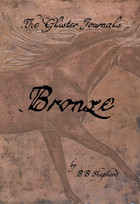
Bronze- B.B. Shepherd

  Bronze by B.B. Shepherd is the first of four books from ‘ the Glister Journals’. It tells the story of a young  girl, Allison who has just moved, with her parents from West L.A to the foothills of the Sierra Nevada   Mountains. Allison, an only child, is shy and bookish, and has always been a target for bullies in the past.  In addition to adjusting to a new town, and a new life, Allison is dealing with all the usual changes that come with growing up.

Soon after arriving at her new home she begins two relationships that will affect her life in a profound way. First is the discovery of a horse on their property, the second is Dave, the handsome third son of a local ranch owner. Through her friendship with the horse, this boy, and Dave’s old friend Robin, she develops a close circle of friends and a love affair with all things equestrian. She finds that she, and her parents, have a whole lot of new terrain to negotiate.

This book is fantastic. The characters are all well-rounded and fully developed. It is a large book, and simply for convenience sake I was restricted to reading it at home, before bed, and I found that I was stretching out my ‘bedtime’ so I could keep reading  for as long as possible. I can’t wait for the next book in the series. While most things are resolved at the end of the first book, there are still plenty of questions that need to be answered. Plus, I am finding that, since I finished reading it, I am missing the characters and want to know what they are up to.

I have categorised this book as being “Young Adult” fiction, but this classification shouldn’t suggest that the writing is in any way deficient or weak. There are very strong themes about friendship, loyalty and integrity that should be universal for everybody. I highly recommend this to anyone who wants a good read.

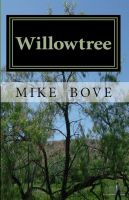
Willowtree- Mike Bove

Willowtree  by Mike Bove is a so-so murder mystery set in the fictional Arizona town of Willowtree, it is  the first Bruce DelReno Mystery. When Bruce, a retired mail-man, is playing golf, he stumbles across some old bones, while looking for his ball. Later, while investigating the find with an anthropologist friend (a fellow golfer) and his Golden Retriever, Keely, believing the bones to be from an old Indian burial ground, they discover a much more recent set of human remains. Bruce, who spend everyday at the golf course since his retirement, adds amateur sleuth to his favourite pastimes in a bid to catch the killer.

This book takes a while to get going. There were a number of times in the beginning when I came close to abandoning it. As I mentioned earlier, the main character, and narrator, is a keen golfer, and there is a little too much attention, and detail given to the golf in the beginning. Not being a fan of the game (sport?) myself, these descriptions became a bit tedious. Ordinarily, I enjoy the opportunity to learn about things, through my reading, that I don’t know much about, and I thought that golf could be one of them, sadly this wasn’t the case. Unfortunately, the slow pace of a stroll around the golf course, set the pace for the rest of the story.

However, I persevered, and to a certain extent, I was rewarded. Certainly once the body is found and the search for the killer begins, there is enough interest to keep you going to the end of the book. As a murder mystery though, I would classify it as more Murder She Wrote and less James Patterson. I wouldn’t necessarily recommend going out of your way to track down a copy, but if you do come across it, it is an okay read.

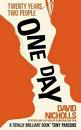
One Day- David Nicholls

I initially started reading One Day by David Nichols, because after having read a lot of heavy, ‘serious’ literature lately, I wanted something light. I had heard some discussion about it in connection with the film, starring Anne Hathaway and Jim Sturgess. I was intrigued, but suspected that it would just be a bit of light ‘chick-lit’ froth, that would be enjoyable, but hardly ‘life changing’.  How wrong I was. This is a wonderful book, and one I suspect will become a well-worn favourite to be returned to regularly like an old friend. Which is appropriate because that is what the book (and the film too I suppose)  is all about.

The main premise of the book is that we begin with the meeting of the two main characters following their graduation from university, on the 15th July 1988, which is also St Swithin’s Day. We then revisit the two characters every year for the next nearly 20 years, always on the same day. With each chapter, and each passing year, we are quickly become acquainted with what has been happening in their lives over the last twelve months.

As I said, I loved this book. The two main characters are great, with great depth. We don’t always ‘like’ them, indeed there are times when the male lead in particular makes me want to throw things at him, but we still retain a desire to keep up with the events of their respective lives, and how their friendship grows and survives through all that life can throw at any relationship.

It is also an emotional book, surfing the joys, the sadness and the in-between of these two people.Be warned, you will need to keep the tissues on stand-by on several occasions. But there are also plenty of laugh out loud moments too. Although this will probably appeal more to women than men, it is an excellent book that I would happily recommend it to anyone.

Children of the Elementi- Ceri Clarke

Image:Lter small white.gif

Children of the Elementi by Ceri Clarke is a good read in the Fantasy Genre.  We begin the story with the dramatic overthrow of the Elementi Empire. The Empire had been held together through the combination of the five most senior Elementi, who had dominion over the elements. These were fire, water, air and earth, with the fifth member being the High-King who had a little of all four elements and provided a means for all the elements to work in harmony together. However, unbeknown to those behind the overthrow, the offspring of each of the Elementi rulers were spirited away, to be called on to return the Empire to its peaceful, former glory.

This story got going straight away. I found that I was hooked almost immediately. The writing is fast passed and easy to get through. As an example of the genre, Children of the Elementi ticks all the right boxes.

If I had any criticism, it would be with the ending. The book isn’t very long, and while brevity isn’t necessarily a bad thing, in this case the conclusion does feel a little rushed. In other words I wanted more.

But otherwise this is a worthwhile novel, that will probably take a couple of hours to knock over.Definitely worth tracking down.

Cloud Atlas- David Mitchell

Cover of "Cloud Atlas"
Cover of Cloud Atlas

Cloud Atlas by David Mitchell was published in 2004, and was shortlisted for the Man Booker Prize.  It is a series of six short stories, spread across time beginning in the 1800’s and finishing in a post- apocalyptic future.

In addition to being six stories, it is also divided into two halves. In the first half we move through each story, in chronological order, moving forwards through time. Each story comes to an abrupt end, leaving the reader anxious to know what comes next, only to continue on into the next. The experience is not unlike watching television. We move from historical fiction, through to 1970’s political thriller, to a futurist sci-fi drama, with no more than the turning of a page.  A testament to how good this guy is as a writer, despite the shock of being dragged away from a story that we have become emotionally involved in, we are quickly sucked into the new world within no more than a few paragraphs.

Something else that is noteworthy is that with each change of story, as well as changing between eras and genres, each story has a new voice, they are all written from a different point-of-view.

As I said the book is in two halves. The first half is mainly concerned with the narrative of each individual story. The reader is vaguely aware of a ‘link’ between them, but we are absorbed in the ‘here-and-now’ of each new story. But, something happens about mid-way through the sixth story (incidentally the only one of the six that is told without any break). The book shifts from being merely a description of the events unfolding, and begins to explore some far bigger, and weightier issues. It starts to ask some big questions about freedom, about the role and nature of history, about the difference between civilisation and barbarism (and who gets to decide which is which). Following the conclusion of the sixth story, we start moving back through the other five stories (from where we left off) in reverse chronological order.

This book is brilliant. There were times when I was reading where I felt compelled to write down quotes from it, to remember later. Other times I simply had to sit and ponder the questions that this book asks of it reader. I had to leave a full day before I could even think about starting another book, because I had been so deeply affected, and didn’t want that feeling to go away.

Apparently, this book has been made into a film, set for release sometime in 2011. I’m not sure whether this will translate on to the screen effectively. But, I understand the impulse of those behind the project to want to share this with as many people as possible.

Journey Without Maps- Graham Greene

1st edition cover (Doubleday, Doran)
Image via Wikipedia

Journey Without MapsGraham Greene is a travel novel, chronicling the author’s experience of his four-week walking tour from Freetown, Sierra Leone through to Grand Bassa, Liberia in 1935. The ‘without maps’ refers to the fact that at the time the only available cartography of the area was from the British, whose maps of the area were based entirely on guess-work, and so were just wrong; or else the Americans, who when they weren’t sure, simply left the area blank. He describes these as being akin to the maps of the times past when the unknown areas we labelled ‘here be monsters’.

His aim, in going on his expedition, is to see for himself one of the last corners of the world ‘uncorrupted’ by western civilisation. He is also keen to recreate the experience of John Conrad’s book, Heart of Darkness. On his journey he travels with his cousin Barbara Greene, and four guides recruited from Freetown, Sierra Leone. He also has with a number of ‘porters’ that he hires at various villages along the way, to carry them through the jungle.

When they first set out, Greene is scathing of the negative impact that colonisation has had on the people of Western Africa. He talks bout the place having all the short-comings of ‘civilisation’,with almost none of the benefits. He also criticises the abject poverty that the people are allowed to live in, while their colonial overlords make little or no effort to do anything about it.

At first, he is enamoured with the hospitality and the general nature of the people of Liberia. He soon realises that the people are as fascinated by him, as he is by them. He has the privilege of witnessing the various rites and rituals that fill the lives of these people. However, the deeper he goes, and the less the people are touched by any semblance of white influence, the novelty begins to wear off.  The rats, illness, having to referee the constant squabbles between the porters (who come from different regions) and just the responsibility of being ultimately responsible for the lives of all those travelling with him, take their toll.

Greene has a very dry style of writing, and may not be for everyone. However, it is definitely worth persevering with. This is a terrific travelogue. It is a fascinating account of a trip through a part of the world that, let’s face it, most of us will never see for ourselves. I love that he starts out with romantic notions about the place, but that the reality of it all very quickly pushes that aside, and he is very honest about his experiences. He is able to convey his experience in a way that makes you feel like you’re there with him. When toward the end he arrives at a town that has a truck that can carry them the last part of the journey (bringing it all to an end that much sooner), we feel the same joy and elation.

The Tiger’s Wife- Téa Obreht

The Tiger’s Wife by Téa Obreht is the story of Natalia, a young doctor in the former Yugoslavia, who upon learning the news that her beloved grandfather has died, remembers the stories he had told her throughout her life. The main stories she returns to are the story of the ‘deathless man’ and the story of the ‘tiger’s wife’.

This is a wonderful book, so full of life and whimsy, but always in the background is the tragedy of loss and hardship that comes from a land that has been if not at war, then at least preparing for war, for most of the last hundred years or more. I found this book by accident, and when I realised that it had as its backdrop the Balkan Wars that followed the break-up of the former Yugoslavia, I was hesitant, expecting it to be depressing. I am so glad that I ignored my hesitation.

While the various wars that have beset the area are a near constant feature of the landscape, it is never allowed to intrude on the telling of the stories. If anything, the book is about how life continues despite the horror of war, and that human beings always find ways to cope.

It is a country where superstition rules. To begin with we share the frustration of Natalia (and her grandfather) with the prevailing superstition that seems to grip the people, refusing to make way for reason. In many ways this superstition exacerbates that tensions between the different religions and creeds that make up the Balkan people. However, we eventually come to understand that superstition can serve a useful function in providing the survivors of horror, the means to go on.

This is Obreht’s first novel, and at the age of 26, she has already set the literary world on fire. She has won several awards about the place for her short stories, and The Tiger’s Wife was the Winner of the Orange Prize for Fiction in 2011. It is with great anticipation that I look forward to seeing what she produces next.